Understanding the Medical Emergency: Ischemic Stroke
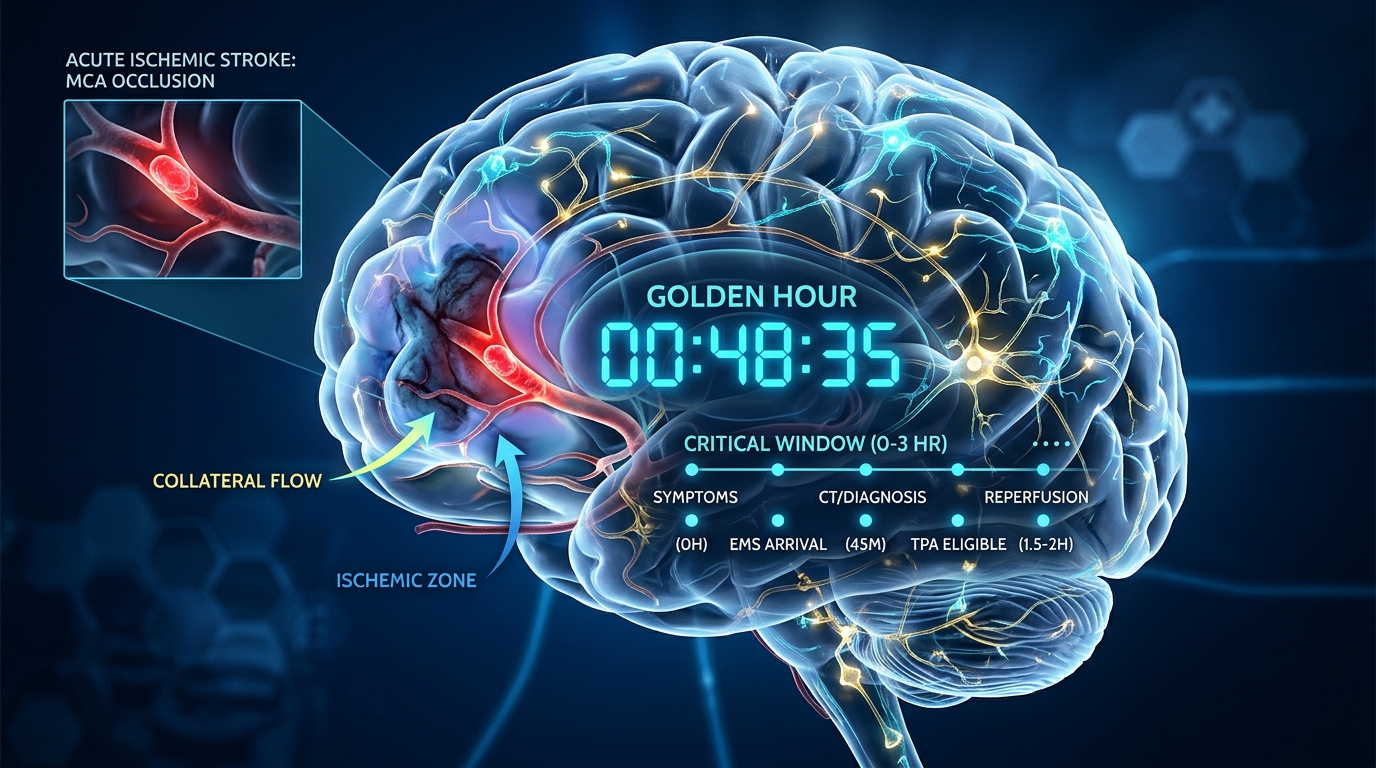
A stroke occurs when the blood supply to part of your brain is interrupted or reduced, depriving brain tissue of oxygen and nutrients. Within minutes, brain cells begin to die. It is the leading cause of adult disability and one of the top causes of mortality in India. However, with modern neurovascular interventions, stroke is both treatable and often reversible if addressed within the golden window.
The "BE-FAST" Rapid Recognition Code
The 4.5-Hour "Golden Window" for IV Thrombolysis
When a patient reaches emergency care within 4.5 hours of symptom onset, the stroke team immediately performs an urgent non-contrast CT brain scan to rule out hemorrhage. If ischemic, intravenous thrombolysis (clot-dissolving medication like Alteplase or Tenecteplase) is administered to dissolve the obstructing arterial thrombus and restore cerebral blood flow.
Endovascular Mechanical Thrombectomy (EVT)
For large vessel occlusions (LVO) in major cerebral arteries, minimally invasive catheter-guided mechanical thrombectomy can physically extract the blood clot up to 24 hours from onset under advanced neuro-imaging guidance.
What NOT to do during a suspected stroke:
- Do NOT give aspirin or blood thinners without a doctor's confirmation and a brain CT scan.
- Do NOT give food, water, or oral pills, as swallowing muscles may be paralyzed, causing choking or aspiration pneumonia.
- Do NOT wait to see if symptoms improve on their own. Every minute of delay causes irreversible brain cell loss.